


Male Breast Reduction in Thousand Oaks, CA
Gynecomastia Surgery for a Flatter, More Masculine Chest Contour
Gynecomastia is the enlargement of male breast tissue and can affect men at nearly any age. For some, it appears as a small amount of fullness beneath the nipple and areola. For others, excess fat, glandular tissue, and skin can create a more developed breast shape that remains noticeable even at a healthy weight.
Although gynecomastia is common, it can be difficult to conceal and may affect how comfortable a man feels wearing fitted clothing, going shirtless, exercising, or participating in activities such as swimming.
At the Kryger Institute of Plastic Surgery in Thousand Oaks, board-certified plastic surgeons Dr. Zol Kryger and Dr. Gil Kryger perform male breast reduction surgery to address the specific combination of tissue contributing to an enlarged chest. Depending on the degree of gynecomastia, treatment may involve liposuction, direct removal of glandular breast tissue, skin removal, or a combination of techniques.
The goal is to create a flatter, firmer chest contour that is balanced with the rest of the body while using the least extensive surgical approach appropriate for the individual patient.
What Is Gynecomastia?
Gynecomastia refers to enlargement of breast tissue in males. It can affect one or both sides of the chest and can vary considerably in severity. Some men develop relatively minor fullness concentrated beneath the nipple and areola, while others have more significant breast enlargement involving glandular tissue, excess fat, and stretched skin.
An important part of planning male breast reduction is determining what is actually creating the fullness. Excess fat can often be reduced through liposuction, while firm glandular breast tissue generally requires surgical excision.
Patients with more significant breast enlargement may also require removal of excess skin to achieve an appropriately tightened chest contour. Because the anatomy differs from patient to patient, there is no single gynecomastia operation that is appropriate for every man.
What Causes Enlarged Male Breasts?
Enlarged male breasts, or gynecomastia, can develop for a variety of reasons, and in some cases there may be no single identifiable cause. Hormonal changes can contribute to breast tissue development, which is one reason gynecomastia commonly occurs during adolescence. Certain medical conditions can also contribute to enlarged male breast tissue.
Before recommending surgery, it is important to consider whether an underlying condition or hormonal imbalance may be responsible for the change. When an identifiable medical cause is present, addressing that condition may sometimes improve the breast enlargement without surgery.
Men who are otherwise healthy but continue to have persistent gynecomastia may be candidates for surgical treatment.
Who Is a Candidate for Male Breast Reduction?
Male breast reduction may be appropriate for men who are in good overall health and bothered by persistent enlargement of one or both breasts.
Candidates may have:
- Localized fullness beneath the nipple or areola
- Excess fat contributing to chest fullness
- Firm or prominent glandular breast tissue
- A combination of excess fat and glandular tissue
- More significant breast enlargement with loose or stretched skin
- Asymmetry between the two sides of the chest
- Gynecomastia that has not improved despite addressing an underlying cause when applicable
- Realistic expectations about surgery, scars, recovery, and results
Teenage boys with persistent gynecomastia may also be considered for surgery in appropriate circumstances. Because breast enlargement during adolescence can be associated with hormonal changes, the Kryger Institute evaluates younger patients carefully before recommending surgical treatment.
How Is Gynecomastia Treated?
The technique used for male breast reduction depends primarily on the degree of gynecomastia and the type of tissue creating the enlarged appearance.
Liposuction for Mild Gynecomastia:
When chest fullness is primarily caused by excess fatty tissue and there is little excess skin, liposuction may be sufficient.
The existing Kryger Institute approach includes ultrasonic liposuction for appropriate patients with slight breast enlargement. By removing unwanted fat, liposuction can help flatten and better define the chest while limiting the need for more extensive incisions.
Liposuction with Glandular Tissue Removal:
Moderate gynecomastia may involve both fatty and denser glandular breast tissue.
Because glandular tissue cannot necessarily be corrected with liposuction alone, direct excision may also be required. The tissue can be removed through a small incision positioned along the border of the areola when appropriate.
Combining liposuction with tissue excision allows the surgeons to address both components of the enlarged breast and create a smoother chest contour.
Skin and Tissue Removal for Significant Gynecomastia:
Men with larger breasts may also have stretched or redundant skin.
In these cases, removing fat and glandular tissue alone may leave excess skin behind. More extensive male breast reduction can therefore include removal of excess skin as well as the underlying breast tissue.
This approach requires additional incisions and consequently creates more visible scarring, including scars around and potentially beneath the areola. During your consultation, your surgeon will explain the extent of correction necessary and the scars associated with the recommended technique.
Do I Need Liposuction or Glandular Tissue Removal?
This is one of the most important distinctions in gynecomastia surgery. Liposuction treats fat. Excision treats breast tissue and, when necessary, excess skin. For men whose enlarged chest is predominantly the result of excess fatty tissue, liposuction may provide the correction needed.
If firm glandular tissue is responsible for the fullness beneath the nipple and areola, that tissue generally needs to be directly removed.
Many men have both fatty and glandular components, making a combined approach appropriate. The Kryger Institute determines the surgical technique after evaluating your chest anatomy, tissue composition, skin quality, and degree of enlargement.
The objective is not to perform a more extensive operation than necessary. It is to use the approach capable of adequately correcting the tissue responsible for your gynecomastia.
What Happens During Male Breast Reduction Surgery?
Male breast reduction is customized according to the amount and type of tissue that needs to be corrected. For patients requiring liposuction, small incisions allow the surgeon to remove excess fat and sculpt the chest. When glandular breast tissue is present, an incision can be made along the border of the areola so the unwanted tissue can be directly removed. The remaining tissue is carefully contoured to create a smoother transition across the chest.
Patients with significant skin excess require a more extensive procedure to remove loose skin in addition to excess fat and glandular tissue. The location and extent of the incisions therefore depend on the severity of gynecomastia and the techniques required to achieve an appropriate result.
Your surgeon will explain the recommended surgical plan, anticipated incision pattern, and postoperative care during your consultation.
What Is Recovery Like After Male Breast Reduction?
Recovery varies according to the extent of surgery performed. A patient undergoing liposuction for relatively mild gynecomastia will not necessarily have the same recovery as someone requiring glandular excision and significant skin removal. Swelling, bruising, tenderness, and tightness can be expected during the initial healing period.
These gradually improve as the tissues recover and the new chest contour begins to become more apparent. Patients will temporarily need to limit strenuous exercise and activities that place stress on the chest. Your surgical team will provide specific instructions regarding activity, incision care, and your gradual return to work and exercise based on the procedure performed.
Because some postoperative swelling is expected, results continue to refine as healing progresses.
What Will My Scars Look Like?
Scarring is an important consideration in male breast reduction, and the amount of scarring generally corresponds to the amount of correction required. When liposuction alone is appropriate, only small access incisions are needed.
When glandular tissue must be removed, an incision may be placed along the border of the areola, helping it blend with the natural transition in skin color. More significant gynecomastia involving excess skin requires additional incisions. In larger reductions, scars may extend around and beneath the areola.
During your consultation, your surgeon will explain the anticipated incision pattern so that you can weigh the expected improvement in chest contour against the scars required to achieve it.
Male Breast Reduction Results
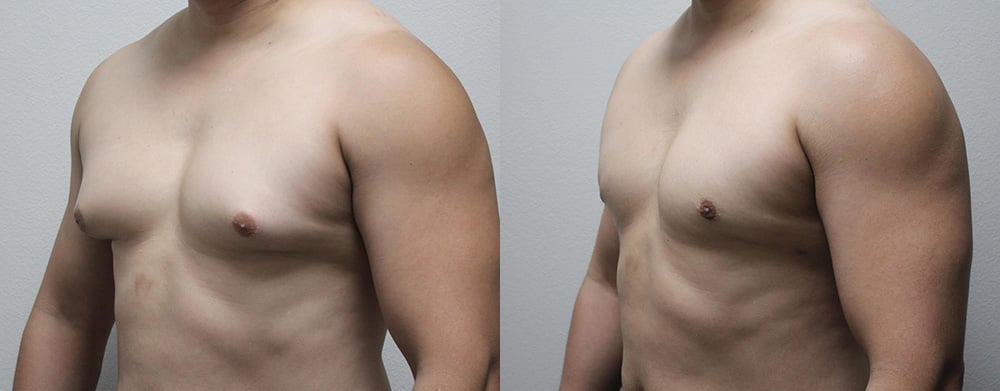
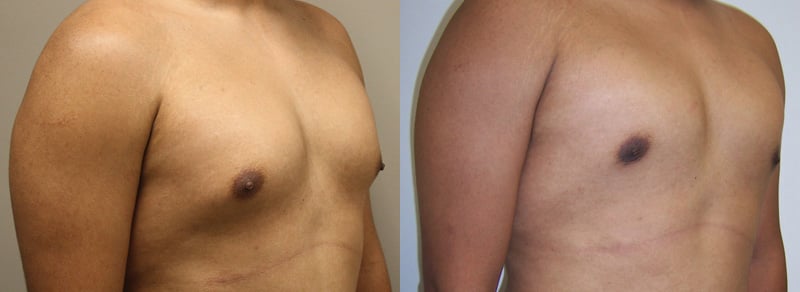
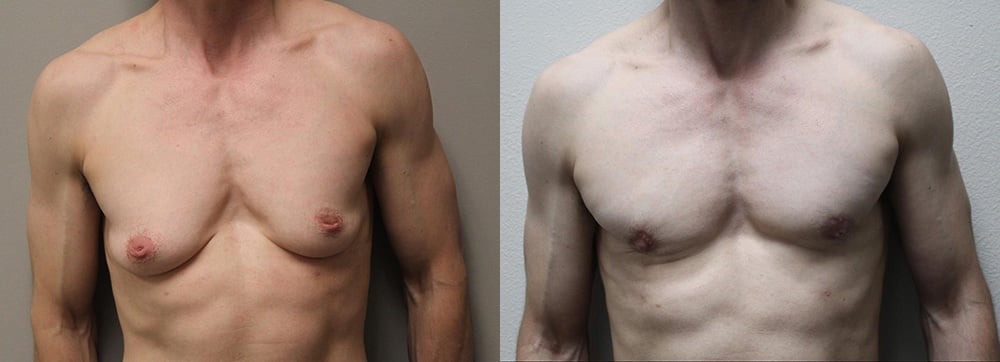
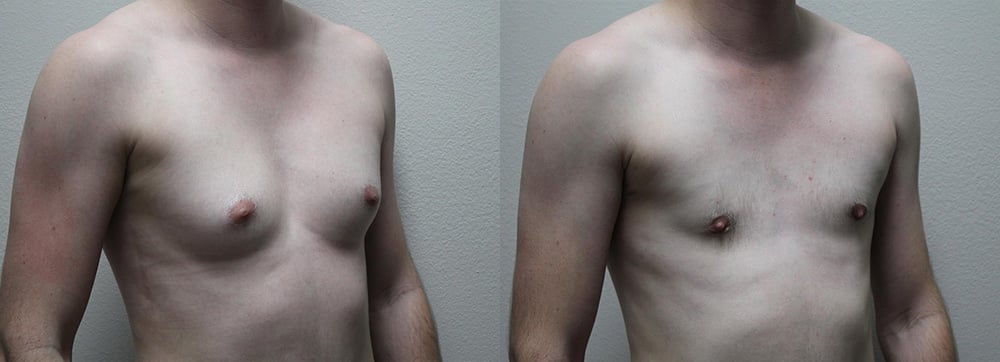
The goal of gynecomastia surgery is to create a flatter and more proportionate male chest by removing the excess tissue responsible for breast enlargement. Some improvement may be apparent soon after surgery, although swelling can temporarily obscure the final contour. As swelling subsides and the tissues settle, the shape of the chest becomes increasingly defined.
The degree of change depends on the patient’s starting anatomy and the extent of surgery required. Viewing male breast reduction before-and-after photos can be particularly helpful when considering surgery because they demonstrate the different degrees of gynecomastia the procedure may address and the types of results that may be possible.
Why Choose the Kryger Institute for Male Breast Reduction?
Male breast reduction requires more than simply removing as much tissue as possible.
The chest must be carefully contoured so that the remaining tissue appears smooth and proportional while maintaining an appropriate relationship between the nipple, areola, chest wall, and surrounding anatomy.
At the Kryger Institute of Plastic Surgery, Dr. Zol Kryger and Dr. Gil Kryger bring extensive plastic surgery experience to the treatment of gynecomastia and other male body-contouring concerns.
Each procedure is planned according to the individual patient’s anatomy and degree of breast enlargement. Whether treatment requires liposuction alone or a more comprehensive reduction involving glandular tissue and skin, the goal is to achieve meaningful improvement using an approach appropriate for that patient’s needs.
Patients also benefit from our on-site, state-of-the-art operating suite, which offers:
- A private, fully equipped environment designed for advanced facial surgery
- Greater surgical precision and continuity of care
- A streamlined experience from consultation through recovery
Patients considering male breast reduction are encouraged to explore the Before & After Gallery to see results from real Kryger Institute patients.
Real Patient Experiences
At the Kryger Institute of Plastic Surgery, we have experience in a vast array of surgical and non-surgical procedures. Click below to see some before and after photos of male breast reductions.
Where do I even begin. How about at the front desk, where whoever is sitting in that seat greets you like you are their best friend that they haven’t seen in months and they are just so excited to welcome you to their facility. Let’s talk about Sunshine. I have never met a nicer employee at any doctors office, emergency room or otherwise in the history of my life. She made me feel so welcome like I was meant to be there. She answered all my questions thoroughly and was a ray of sunshine. How about the doc? (Zol) He is very non-nonsense and to the point and I appreciate that about him. He did a fantastic job and I couldn’t have picked a better surgeon. Every nurse, medical assistant, anesthesiologist, etc., that I had to work with at the hospital facility was absolutely fantastic, the place was more like a resort than a hospital.
– Nic K.
Frequently Asked Questions
Does Insurance Cover Male Breast Reduction?
Coverage for gynecomastia surgery depends on the patient's insurance plan, the reason for surgery, and the insurer's requirements. When male breast reduction is considered cosmetic, it is generally not covered. Patients should contact their insurance carrier regarding their individual benefits and coverage requirements.
Can Gynecomastia Come Back After Surgery?
Male breast reduction removes the excess fat and/or glandular tissue present at the time of surgery. However, future hormonal changes, medical conditions, weight changes, or other factors that contribute to breast enlargement may affect the chest over time.
Evaluating potential underlying causes before surgery and maintaining a stable weight afterward can be important for preserving results.
How Do I Know If I Need Liposuction or Tissue Removal?
The answer depends on what is creating your chest fullness. Fatty tissue may be treated with liposuction, while firm glandular breast tissue generally requires direct excision. Many patients require a combination of the two techniques. A physical evaluation is the best way to determine which approach is appropriate.
How Long Does Recovery Take After Male Breast Reduction?
Recovery depends on the extent of surgery. Patients undergoing liposuction alone may have a different recovery than those requiring glandular tissue or skin removal. Your surgeon will provide a personalized timeline for returning to work, exercise, and unrestricted activity based on your procedure and healing progress.
When Can I Exercise After Gynecomastia Surgery?
Strenuous exercise and activities that heavily engage the chest will need to be restricted during the initial healing period. The timing for resuming exercise varies with the extent of surgery and individual recovery. Patients should wait for clearance from their surgeon before returning to strenuous activity.
Can Teenagers Have Gynecomastia Surgery?
Teenage boys with gynecomastia may be candidates for male breast reduction in selected circumstances. Because gynecomastia can occur during normal hormonal changes in adolescence, younger patients require careful evaluation to determine whether surgery is appropriate or whether additional observation or medical evaluation should occur first.
Schedule Your Male Breast Reduction Consultation in Thousand Oaks
Gynecomastia can range from a small area of prominent tissue beneath the nipple to significant breast enlargement involving excess fat, glandular tissue, and skin. The right treatment depends on understanding exactly what is creating the enlarged appearance.
At the Kryger Institute of Plastic Surgery, Dr. Zol Kryger and Dr. Gil Kryger personalize male breast reduction to each patient’s anatomy, degree of gynecomastia, and goals.
If you are bothered by persistent male breast enlargement and want to learn whether liposuction, tissue removal, or a combined approach may be appropriate, contact the Kryger Institute in Thousand Oaks to schedule your consultation.
Related Procedures
Meet the Surgical Team at Kryger Institute of Plastic Surgery
Dr. Gil Kryger and Dr. Zol Kryger are board-certified plastic surgeons with over two decades of experience. Trained at Stanford and Northwestern, they are published authors, textbook editors, and national presenters in the field of cosmetic and reconstructive plastic surgery.