


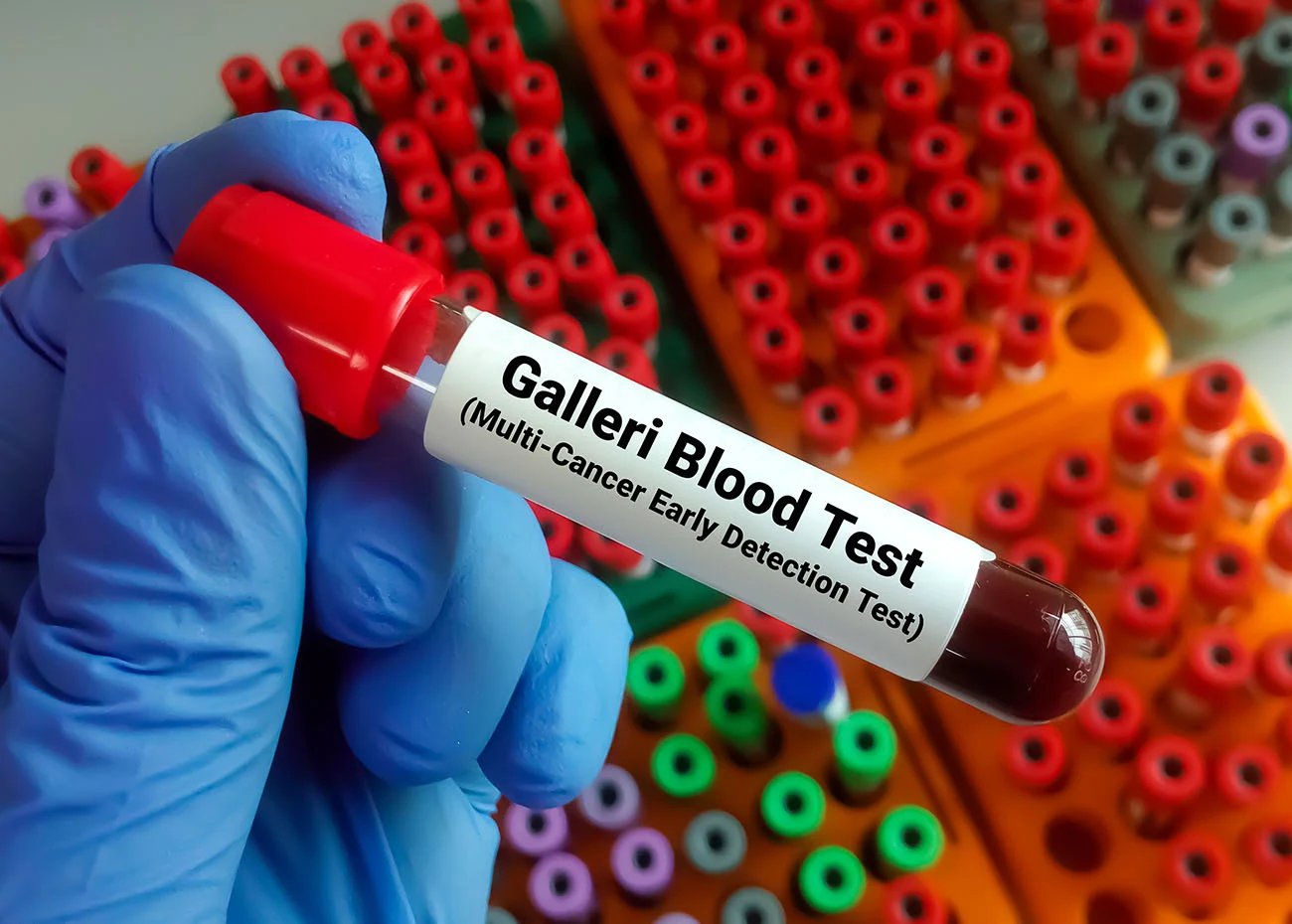
You may have seen recent headlines about Galleri®, a multi-cancer early detection blood test designed to look for signals associated with multiple types of cancer.
On September 23, 2026, an FDA advisory committee met to review GRAIL’s application for Galleri for cancer screening in adults age 50 and older. The panel’s recommendation is an important step—but it does not mean Galleri is now FDA approved, and it does not replace established cancer screening.
For patients in Los Angeles, Thousand Oaks, Westlake Village, Calabasas, and Ventura County, here’s what I think is important to understand.
Have you already undergone treatment for breast cancer, skin cancer, or another cancer? At Kryger Institute of Plastic Surgery, we provide advanced breast reconstruction, skin cancer reconstruction, and other reconstructive procedures following cancer treatment.
What Is the Galleri Multi-Cancer Blood Test?
Galleri is a blood test developed by GRAIL that looks for cancer-related signals in cell-free DNA.
Unlike traditional screening tests that focus on one specific cancer, Galleri is designed as a multi-cancer early detection test. The proposed FDA indication is for adults 50 years and older.
If a cancer signal is detected, the test may also predict where in the body that signal originated. However, a positive result is not itself a cancer diagnosis. Additional diagnostic testing is needed.
What Did the FDA Panel Decide?
On September 23, the FDA’s Molecular and Clinical Genetics Panel reviewed Galleri’s premarket approval application.
The advisory committee’s vote is exactly that—advisory. The FDA considers the committee’s recommendations along with the complete body of evidence before making its regulatory decision.
So, what changes for patients today?
Nothing about your recommended cancer screening should change based on this panel meeting alone.
How Effective Is the Galleri Cancer Test?
This is where the discussion becomes more complicated.
The large NHS-Galleri trial evaluated multi-cancer screening in more than 140,000 adults in England. The study did not meet its primary endpoint of significantly reducing the combined number of Stage III and Stage IV cancers.
There were encouraging findings in some secondary and exploratory analyses, including reductions in certain Stage IV diagnoses, but those findings do not change the most important limitation for patients:
A negative Galleri result does not mean you are cancer-free.
Likewise, a positive result requires additional medical evaluation to determine whether cancer is actually present.
Does Galleri Replace Mammograms, Colonoscopies, or Other Cancer Screenings?
No.
Galleri should not be considered a replacement for established, guideline-recommended cancer screening.
Depending on your age and individual risk factors, that may include screening such as:
- Mammography for breast cancer
- Colon cancer screening
- Cervical cancer screening
- Low-dose CT for certain people at increased risk for lung cancer
- Other screening recommended by your physician based on your medical and family history
If you’re already due for a recommended cancer screening, don’t postpone it because of Galleri or another multi-cancer blood test.
What Happens If Galleri Detects a Cancer Signal?
A positive Galleri result doesn’t tell your doctor that you definitely have cancer.
It indicates that additional diagnostic evaluation may be appropriate. Depending on the predicted cancer signal origin and your medical history, that could involve imaging, laboratory testing, specialist evaluation, biopsy, or other diagnostic procedures.
This is one reason I recommend discussing the test with your primary care physician before deciding whether it’s appropriate for you.
What About Patients Who Have Already Had Cancer?
This is especially relevant to our practice.
At Kryger Institute of Plastic Surgery, we care for patients throughout Thousand Oaks, Ventura County, and the greater Los Angeles area who need reconstructive surgery following cancer treatment.
For example, breast cancer treatment may lead patients to consider breast reconstruction after mastectomy, including implant-based reconstruction or reconstruction using their own tissue.
Patients treated for facial skin cancer may need skin cancer reconstruction or reconstruction after Mohs surgery to restore the affected area while preserving function and appearance.
Cancer screening and cancer reconstruction are very different parts of the patient journey, but both benefit from coordinated care between the appropriate specialists.
Should I Get the Galleri Test?
That’s a conversation to have with your primary care physician or appropriate cancer specialist.
Your age, family history, personal cancer history, established screening schedule, and what you would do following a positive or negative result all matter.
Most importantly, don’t interpret a negative Galleri result as a reason to skip established cancer screenings.
Cancer Reconstruction in Thousand Oaks & Greater Los Angeles
If you have already undergone treatment for breast cancer, skin cancer, or another condition requiring reconstructive surgery, we can help you understand your reconstructive options.
The Kryger Institute of Plastic Surgery provides breast reconstruction, microsurgical reconstruction, skin cancer/Mohs reconstruction, scar revision, and other reconstructive procedures for patients from Thousand Oaks, Westlake Village, Calabasas, Ventura County, Los Angeles, and throughout Southern California.