

By Gil Kryger, MD, Board-Certified Plastic Surgeon, Kryger Institute of Plastic Surgery, Thousand Oaks
More and more patients come into our office saying something like, “I’d like to be a little fuller, but I really don’t want implants.” For the right person, there’s a good answer: breast augmentation using your own fat. It’s also called fat transfer, fat grafting, or autologous fat grafting.
It’s an appealing idea. You take fat from somewhere you don’t want it and move it to where you do. It isn’t the right choice for everyone, though. Here’s an honest look at how it works, who it suits, and where it falls short.
What Is Fat Transfer Breast Augmentation?
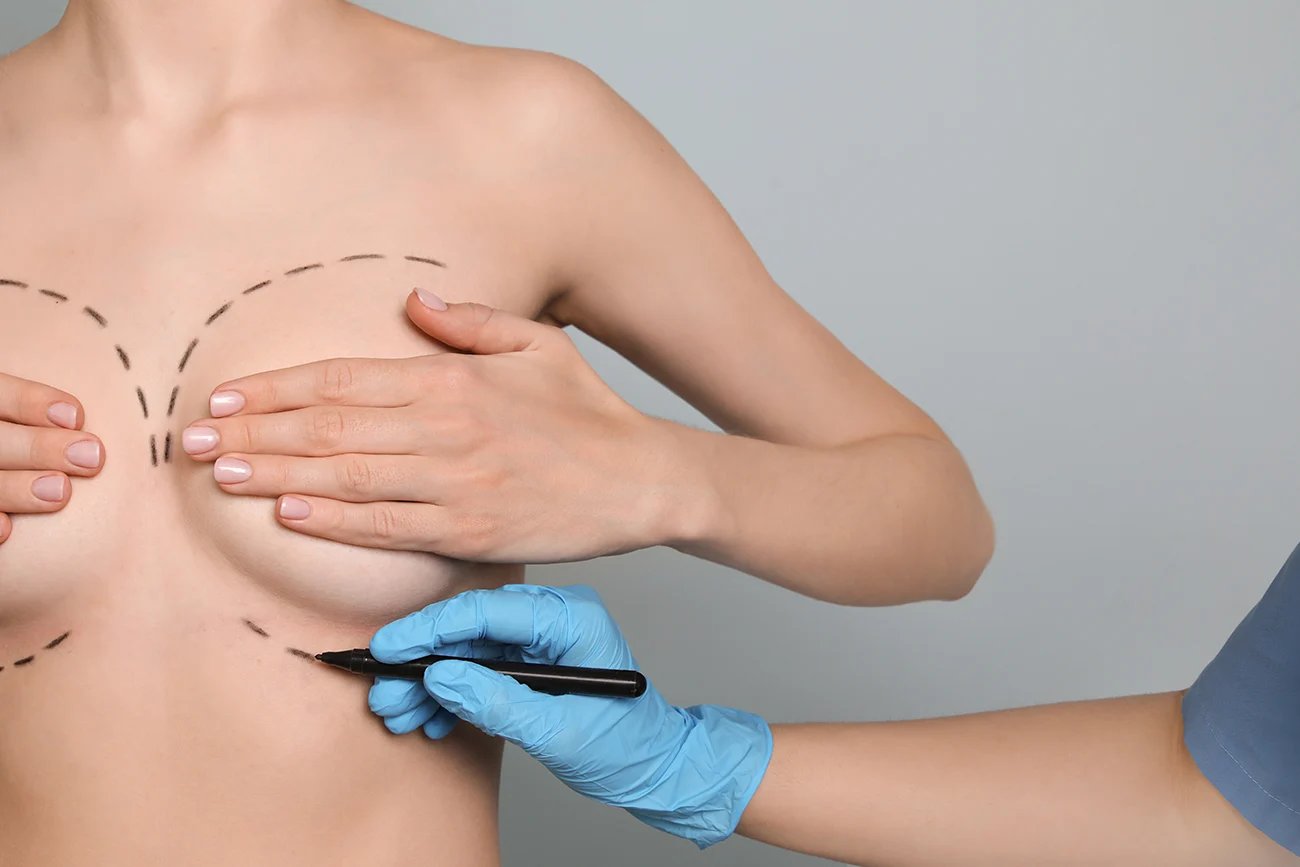
Fat transfer breast augmentation uses your own tissue to add volume to the breasts. There are three steps:
- Harvest. We use gentle liposuction to remove fat from a donor area, usually the abdomen, flanks, back, or thighs. The cannulas are thin, and the incisions are only a few millimeters long.
- Purification. The fat is processed to separate healthy fat cells from fluid, blood, and damaged cells. Only the best-quality fat is used.
- Injection. The purified fat is placed into the breast in many small amounts, in thin layers at different depths. Placing it this way matters. Each small deposit of fat has to pick up a new blood supply from the surrounding tissue to survive.
Dr. Zol Kryger and I both perform fat grafting, and it’s a technique we also use in breast reconstruction and in correcting contour irregularities in other parts of the body.
Who Is a Good Candidate?
Fat transfer tends to work best for women who:
- Want a modest increase. A realistic goal is roughly up to about one cup size, sometimes less. If you want a dramatic change, implants are usually the better tool.
- Have enough donor fat. We need enough fat to harvest. Very slim patients may not have enough to make a meaningful difference.
- Want a natural look and feel. The result is your own tissue, so it feels like your breast because it is.
- Prefer to avoid implants. Some patients don’t want a device in their body, or don’t want to think about future implant replacement.
- Have reasonably good breast shape. Fat adds volume. It doesn’t lift. If you have significant sagging, a lift (alone or combined with augmentation) may be part of the conversation.
- Are healthy, at a stable weight, and nicotine-free.
The Limits: What to Know Going In
I want patients to have realistic expectations, so here are the honest limits:
- Volume is limited. The breast can only safely accept so much fat in one session. Overfilling reduces how much fat survives.
- Some of the fat won’t survive. A portion of the transferred fat is reabsorbed by the body over the first few months. We plan for this, but the amount varies from person to person (roughly half of the fat).
- You may need more than one session. Because of volume limits and resorption, some patients choose a second round to reach their goal. This is necessary in only about 10% of patients and is performed roughly 3 months after the 1st round of grafting (if necessary).
- Results vary. Fat survival depends on your body, the donor site, technique, and how well you follow aftercare. The fat that survives after a few months generally behaves like the rest of your body fat. It can change if your weight changes and typically lasts forever.
The Benefits
- No implant. No device, no implant-related issues like capsular contracture or rupture, no foreign body and no future implant exchanges.
- A body-contouring bonus. The liposuction that harvests the fat also slims the donor area. Many patients like this part almost as much as the breast result.
- Natural feel. The added volume is your own soft tissue.
- Small incisions. Both the liposuction and injection sites are tiny and usually heal to very faint marks.
Risks and Considerations
Every surgery has risks. With fat transfer, the main ones to understand are:
- Fat necrosis and oil cysts. If some fat doesn’t establish a blood supply, it can die and form firm lumps or small fluid-filled cysts. Many are small and harmless, but some may need imaging or treatment. This rarely happens using the Kryger technique.
- Calcifications. Areas of fat necrosis can calcify over time and appear on a mammogram.
- Asymmetry. Fat can survive differently on each side, which may leave some unevenness. This is sometimes addressed in a later session.
- Resorption. As mentioned above, some volume loss is expected in the first few weeks.
- General surgical risks. These include bleeding, infection, contour irregularities at the donor site, and the risks of anesthesia.
A note on mammograms. Fat grafting can create changes on breast imaging, such as oil cysts or calcifications. Modern imaging and experienced radiologists can usually tell these apart from concerning findings. Even so, it’s important to tell your radiologist that you’ve had fat grafting to the breasts every time you have a mammogram or other breast imaging. Keep up with your routine screening. If you’re due for a mammogram, it’s often helpful to get one before surgery so there’s a baseline.
Fat Transfer vs. Implants vs. Hybrid
Implants give the most predictable, and the largest, increase in size in a single operation. They’re the better fit for patients who want more than about a cup or who don’t have enough donor fat. The trade-offs are a device in the body and the possibility of future revision.
Fat transfer gives a smaller, softer, more natural change using your own tissue, plus body contouring. The trade-offs are limited volume, some unpredictability, and the possibility of more than one session.
Hybrid augmentation combines both: a smaller implant provides the main volume, and fat is placed around it to soften the edges and improve the shape, especially in thin patients where an implant’s edges might otherwise be visible or felt. For some patients, this gives the best of both approaches.
The right choice depends on your anatomy, your goals, and your priorities. That’s exactly what we talk through at a consultation.
Getting Ready for Surgery
Your preparation instructions will be specific to you. A few things we commonly discuss:
- Nicotine. Being completely nicotine-free (cigarettes, vapes, patches, gum, and pouches) is a firm requirement. Nicotine constricts blood vessels, and grafted fat depends on a new blood supply to survive.
- GLP-1 medications (such as semaglutide or tirzepatide) are usually held 1 to 2 weeks before general anesthesia. Let us know if you take one.
- Vitamin C. We generally recommend 500 mg three times a day before surgery and for 1 week afterward.
- Fish oil is fine to continue.
- Other supplements and medications. Please bring us a complete list. Rather than a one-size-fits-all rule, we’ll tell you exactly what to stop and when.
Recovery Overview
Most patients find recovery from fat transfer manageable. The donor area, where the liposuction was done, is often more sore than the breasts. Expect bruising and swelling in both areas, and you’ll wear a compression garment on the donor site for 2 weeks.
Many patients return to desk work within about 3-4 days and gradually resume exercise over the following weeks. It’s important to avoid compressing the breasts while the grafts settle. Swelling goes down over the first several weeks, and your final result becomes clear after the transferred fat has stabilized, typically over a few months.
Frequently Asked Questions
How much bigger will I get?
Is the result permanent?
Will it affect my mammograms?
Can fat transfer lift my breasts?
Can I have fat transfer if I'm very thin?
Can fat transfer be used to replace implants?
Is Fat Transfer Right for You?
If you’d like a subtle, natural-feeling enhancement with your own tissue, and you like the idea of contouring another area at the same time, fat transfer breast augmentation may be a great fit. If you’re not sure whether fat, implants, or a combination makes more sense, we’re happy to walk you through the options.
To schedule a consultation with Dr. Gil Kryger or Dr. Zol Kryger at the Kryger Institute of Plastic Surgery in Thousand Oaks, call us at (805) 777-3877.
This article is for general educational purposes and isn’t a substitute for a personal medical consultation.